


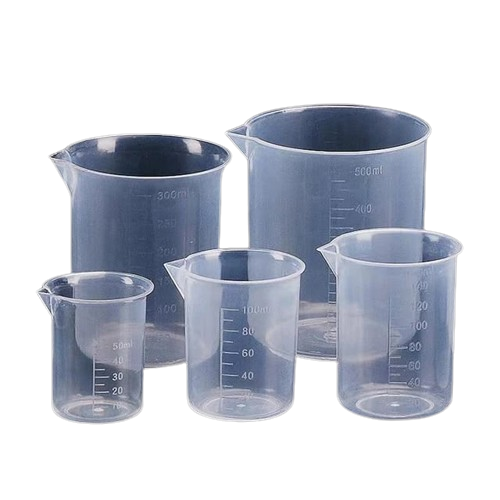
Here are some key features and uses of lab plastic beakers:
Durability: Plastic beakers are more durable and less prone to breakage compared to glass beakers. This makes them suitable for use in environments where glassware may be at risk of damage.
Chemical Resistance: Lab plastic beakers are resistant to a wide range of chemicals, making them suitable for handling acids, bases, and other corrosive substances that may react with glass.
Lightweight: Plastic beakers are lightweight and easy to handle, making them convenient for various laboratory tasks.
Transparency: Many plastic beakers are transparent or translucent, allowing for easy visual inspection of contents and reactions.
Temperature Limitations: While plastic beakers are generally heat-resistant, they have temperature limitations compared to glass beakers. They may deform or melt at high temperatures, so they are not suitable for direct heating on hot plates or with Bunsen burners.
Cost-Effective: Plastic beakers are often more affordable than glass beakers, making them a cost-effective option for laboratories with budget constraints.
Versatile Use: Plastic beakers are used for similar purposes as glass beakers, including mixing, storing, and pouring liquids, as well as observing reactions and conducting experiments.
Plastic beakers come in various sizes and designs, similar to glass beakers, and are widely used in biology, chemistry, environmental science, and educational laboratories. They offer a practical alternative to glassware for routine laboratory tasks and applications where durability and chemical resistance are important considerations.
Lab plastic beaker in Kenya.
Original price was: KSh320.KSh150Current price is: KSh150.
Lab plastic beakers are similar in shape and function to glass beakers but are made from plastic materials instead of glass.
There are no reviews yet.