


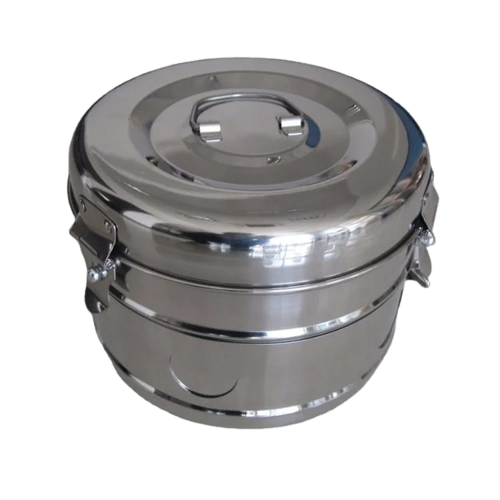
Here are some key features and points regarding a medical sterilization drum:
- Material: Sterilization drums are often made of high-quality stainless steel, which can withstand high temperatures and resist corrosion.
- Perforated Surface: The drum typically has a perforated surface to allow steam or other sterilizing agents to penetrate and circulate, ensuring effective sterilization of the contents.
- Lid: The drum has a removable or hinged lid, also perforated, which is securely sealed during the sterilization process.
- Locking Mechanism: To ensure the contents remain sterile after the sterilization process until they are used, the drum often has a locking mechanism.
- Handles: Many drums are equipped with handles for easy transportation.
- Size Variability: Sterilization drums come in various sizes to accommodate different quantities and sizes of instruments.
- Indicator: Some drums might have a built-in indicator or a place to attach an indicator strip to confirm the successful sterilization of its contents.
- Usage: Instruments are first cleaned and then placed inside the drum. Once sealed, the drum is placed in an autoclave for steam sterilization. After the sterilization process, the drum can be stored, ensuring the instruments remain sterile until the drum is opened for use.
- Reusable: Sterilization drums are reusable. They are designed to undergo the sterilization process multiple times without degrading.
- Environmental Impact: The use of sterilization drums can be more environmentally friendly compared to disposable sterilization pouches or wraps, as the drums reduce waste and are long-lasting.
There are no reviews yet.