
Medical Non-Pneumatic Anti-Shock Garment (NASG): Features, Uses, and Importance in Emergency Obstetric Care
Maternal health remains a major priority for healthcare systems worldwide, especially in low- and middle-income countries where access to emergency obstetric care may be delayed. One of the leading causes of maternal mortality is postpartum hemorrhage (PPH)—severe bleeding after childbirth—which can rapidly lead to hypovolemic shock and death if not managed promptly.
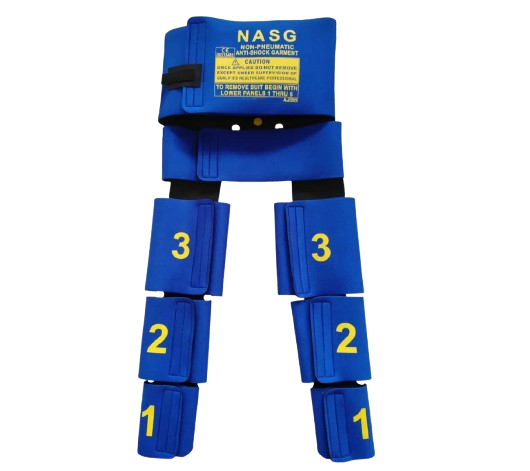
The Medical Non-Pneumatic Anti-Shock Garment (NASG) is a life-saving first-aid device developed to help stabilize women experiencing severe obstetric hemorrhage while they receive definitive medical treatment. Although it does not stop the bleeding or replace medical or surgical interventions, it provides valuable time by improving circulation to vital organs during emergency care and patient transport.
What is a Medical Non-Pneumatic Anti-Shock Garment (NASG)?
A Medical Non-Pneumatic Anti-Shock Garment (NASG) is a reusable compression garment designed to stabilize women suffering from hypovolemic shock caused by obstetric hemorrhage, particularly postpartum hemorrhage. It is made from durable neoprene or similar compression material and consists of several adjustable segments that wrap securely around the legs, pelvis, and abdomen.
Unlike inflatable anti-shock garments, the NASG does not require compressed air or electricity. Instead, it applies consistent circumferential pressure to the lower body, helping redirect blood toward essential organs such as the heart, lungs, and brain. This temporary stabilization can help maintain vital organ perfusion while definitive treatment—such as medication, surgery, or blood transfusion—is arranged.
The NASG is recommended for use by trained healthcare professionals as part of comprehensive emergency obstetric care.
Why is the NASG Important?
Obstetric hemorrhage can progress rapidly, especially in settings where transportation, surgical services, or blood products are not immediately available. Delays in receiving appropriate treatment increase the risk of severe complications and maternal death.
The NASG helps bridge this critical gap by supporting the patient’s circulation during emergencies and transport. Its portability, ease of application, and reusability make it particularly valuable in district hospitals, health centres, maternity units, ambulance services, and rural healthcare facilities.
Key Features of the Medical NASG
The Non-Pneumatic Anti-Shock Garment offers several features that make it an effective emergency obstetric device:
- Reusable design that offers long-term value for healthcare facilities.
- Durable neoprene or medical-grade compression material.
- Six or more adjustable compression segments that fit securely around the lower body.
- Non-pneumatic design that requires no electricity, pumps, or compressed air.
- Lightweight and portable for rapid emergency deployment.
- Quick application by trained healthcare providers.
- Strong fastening system that maintains consistent compression.
- Easy cleaning and disinfection following the manufacturer’s instructions.
- Suitable for use in hospitals, ambulances, maternity units, and emergency referral systems.
Uses of the Medical NASG
The NASG is primarily used in maternal emergency care to:
- Stabilize women experiencing postpartum hemorrhage (PPH).
- Assist in the management of hypovolemic shock caused by obstetric bleeding.
- Support patients during transfer from lower-level health facilities to referral hospitals.
- Improve circulation to vital organs while definitive treatment is being prepared.
- Enhance emergency obstetric response in rural and resource-limited settings.
- Support maternal health initiatives and safe childbirth programs.
Healthcare providers may also use the NASG during other obstetric emergencies involving severe blood loss, based on clinical judgment and established treatment guidelines.
Benefits of Using the NASG
Healthcare facilities can benefit from incorporating the NASG into emergency obstetric care because it:
- Helps stabilize patients during severe blood loss.
- Supports blood flow to vital organs during shock.
- Improves patient safety during referral and transportation.
- Is simple to use after appropriate clinical training.
- Requires no external power source.
- Is reusable, reducing long-term procurement costs.
- Supports emergency response in remote and underserved areas.
- Complements existing maternal health and emergency care protocols.
Who Uses the NASG?
The Non-Pneumatic Anti-Shock Garment is widely used by:
- County and referral hospitals
- Maternity hospitals
- Health centres and dispensaries
- Emergency departments
- Ambulance and emergency medical services
- Obstetricians and gynecologists
- Midwives and maternity nurses
- Humanitarian organizations
- Maternal health outreach programs
- Non-governmental organizations (NGOs)
Best Practices for NASG Use
To ensure effective and safe use, healthcare facilities should:
- Train healthcare professionals on proper application and removal.
- Use the NASG as part of comprehensive emergency obstetric care—not as a replacement for definitive treatment.
- Follow the manufacturer’s instructions for cleaning, inspection, and storage.
- Regularly inspect garments for wear or damage before reuse.
- Maintain adequate stock for emergency maternity services.
Conclusion
The Medical Non-Pneumatic Anti-Shock Garment (NASG) is an invaluable emergency obstetric device that helps stabilize women experiencing severe obstetric hemorrhage and hypovolemic shock. By maintaining circulation to vital organs during the critical period before definitive treatment is available, the NASG supports safer patient transport and strengthens emergency maternal healthcare systems.
For hospitals, maternity units, county health facilities, ambulance services, and humanitarian organizations, investing in quality NASGs is an important step toward improving emergency obstetric preparedness and supporting better maternal health outcomes.
Buy Medical Non-Pneumatic Anti-Shock Garments (NASG) in Kenya
At Tibaquip Africa Medical Supplies, we supply high-quality Medical Non-Pneumatic Anti-Shock Garments (NASG) for hospitals, maternity facilities, NGOs, emergency response teams, and healthcare institutions across Kenya and East Africa.
Our maternal health equipment is sourced to meet the needs of modern healthcare providers, offering dependable performance, competitive pricing, and reliable nationwide delivery.
Contact Tibaquip Africa Medical Supplies today +254717237407 for product information, quotations, wholesale orders, and expert assistance with your maternal and emergency medical equipment requirements.
Keywords
Medical Non-Pneumatic Anti-Shock Garment Kenya, NASG Kenya, postpartum hemorrhage equipment, obstetric emergency devices, maternal health equipment Kenya, PPH management, emergency obstetric care Kenya, maternity hospital equipment, hypovolemic shock garment, emergency medical supplies Kenya, Tibaquip Africa Medical Supplies.