
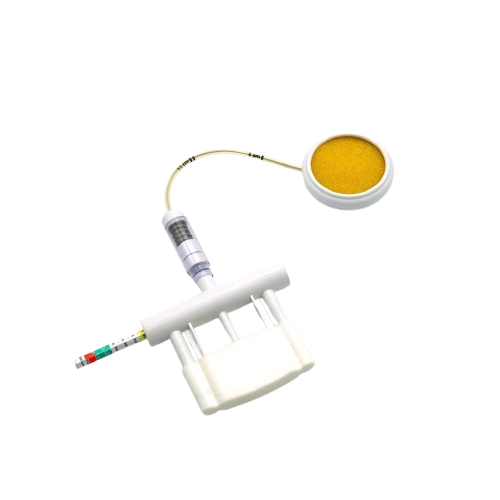
Because the Kiwi Vacuum Extractor is an obstetric device used during assisted vaginal delivery, its use should be limited to trained obstetricians, doctors, or appropriately trained midwives. The exact technique should follow the manufacturer’s current instructions for use (IFU) and the facility’s obstetric protocol.
Step-by-step overview of using a Kiwi Vacuum Extractor
1. Confirm that vacuum-assisted delivery is appropriate
The clinician assesses the mother and fetus, confirms the indication for assisted vaginal birth, establishes fetal head position and station, and checks for contraindications. Informed consent and appropriate preparation for alternative delivery, including caesarean delivery when necessary, are important.
2. Prepare the equipment and delivery team
Open the sterile, single-use Kiwi system and inspect the components. Ensure that appropriate maternal and fetal monitoring, neonatal resuscitation equipment, and personnel capable of managing complications are available. The Kiwi system incorporates a hand-operated vacuum pump, allowing the clinician to control the vacuum directly.
3. Determine the fetal head position
Before applying the cup, the clinician identifies the position of the fetal head and the location of the occiput. Correct identification is essential for appropriate cup placement and traction.
4. Insert and position the vacuum cup
The cup is carefully introduced and positioned on the fetal scalp at the appropriate flexion point. The Kiwi OmniCup has a low-profile cup and flexible stem designed to facilitate positioning over the flexion point in different fetal head positions.
5. Create the vacuum
Using the Kiwi’s integrated PalmPump™, the clinician establishes the vacuum according to the manufacturer’s IFU and confirms that the cup is securely attached. The clinician should continuously monitor the cup and fetal/maternal condition.
6. Apply traction with maternal pushing
Once adequate vacuum has been established and the cup is correctly positioned, traction is applied in coordination with maternal contractions and pushing. Traction should follow the appropriate direction of the pelvic axis and should be controlled rather than excessive.
7. Monitor progress and the cup during each traction attempt
The clinician monitors fetal descent, maternal and fetal condition, cup attachment and traction. Some Kiwi models include a Traction Force Indicator, which provides a visual indication of the force being applied.
8. Release the vacuum and remove the cup after delivery
After the baby’s head is delivered and assistance is no longer required, the vacuum is released according to the manufacturer’s instructions and the cup is removed. The baby and mother should then be assessed for any complications associated with assisted vaginal birth.
Important safety note
This is a clinical overview, not a substitute for hands-on obstetric training or the Kiwi manufacturer’s IFU. Incorrect cup placement, excessive traction, prolonged attempts, or inappropriate patient selection can cause serious maternal or neonatal complications. Tibaquip Africa ltd emphasizes the expertise required for safe operative vaginal birth.