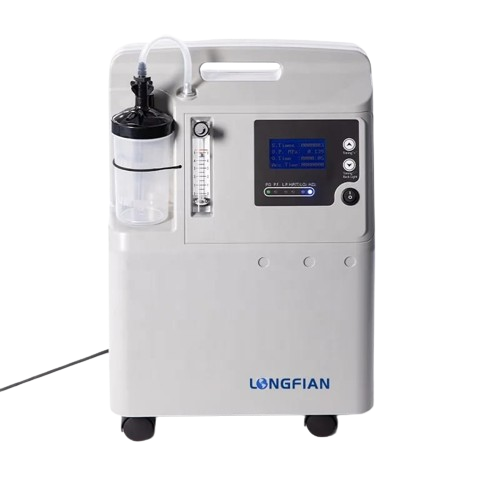
Bed side 5 liters oxygen concentrator in kenya
(0)An oxygen concentrator is a medical device that concentrates oxygen from the surrounding air to supply an oxygen-enriched gas stream. These machines are popular for providing supplemental oxygen to individuals who require it due to various health conditions. A bedside 5-liter oxygen concentrator typically provides up to 5 liters per minute (LPM) of continuous flow oxygen.
In stock
SKU: bed-side-5-liters-oxygen-concentrator in kenya
Categories: Theater and surgical products
Product description
Here are some features and characteristics associated with a 5-liter bedside oxygen concentrator:
- Oxygen Purity: Most concentrators offer oxygen purity levels of 87% to 95.5% or higher. Some devices have built-in oxygen purity indicators or alarms.
- Flow Settings: A 5-liter concentrator usually provides continuous flow oxygen, typically adjustable from 0.5 LPM up to 5 LPM.
- Size and Weight: Being a bedside unit, it is larger than portable oxygen concentrators. Typical weight ranges from 25 to 50 pounds.
- Power Consumption: These devices are designed for home use and typically plug into standard wall outlets. The power consumption can vary, but many 5-liter units use about 300-500 watts.
- Noise Level: While designed to be relatively quiet, there's still some noise involved. Most bedside units have noise levels ranging from 40 to 60 decibels, depending on the model and settings.
- Maintenance: Most oxygen concentrators have air intake filters that need to be cleaned or replaced regularly. Some models may also have other replaceable parts like sieve beds.
- Safety Features: Many units have built-in safety alarms for scenarios like power failure, high or low pressure, and low oxygen purity.
- Humidification: Some oxygen concentrators have built-in humidifiers or can be attached to external humidifier bottles to moisten the oxygen, making it more comfortable for the user.
- Oxygen Outlet: Most units will have a barbed outlet for attaching oxygen tubing, which is then connected to a nasal cannula or mask for the user.
- Operating Altitude: Oxygen concentrators are generally optimized for use at specific altitude ranges. If you live in a high-altitude area, ensure the concentrator you choose is effective for your elevation.
Customer reviews
Not rated yet0 reviews
No reviews yet. Be the first to rate this product.
Write a review
Your email address is optional and will not be displayed.
Related products
Sale
Sale
Sale
Sale