
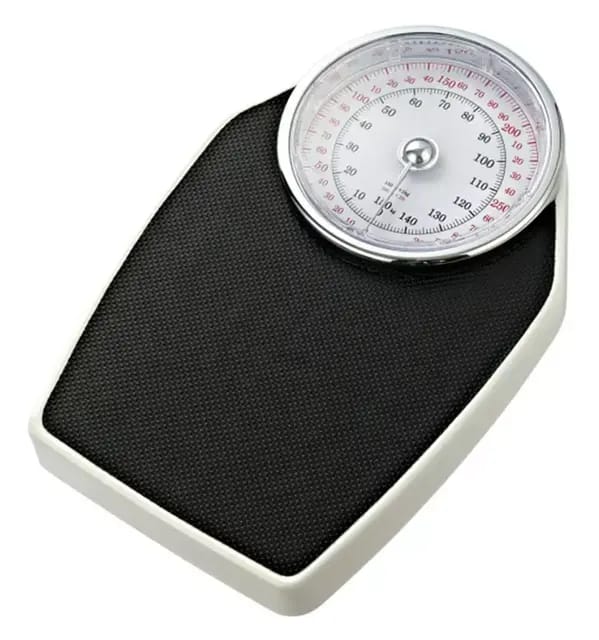
Mechanical weighing scale in kenya
(0)A mechanical weighing scale, often referred to as an analog scale, operates without the need for batteries or electronic power sources. Instead, it relies on internal mechanical components to measure weight.
In stock
SKU: mechanical-wheighing-scale in kenya
Categories: Hospital furniture and beds.
Product description
- Basic Structure:
- Platform or Weighing Area: Where the object or person to be weighed is placed.
- Needle or Indicator: Points to the weight on a marked scale or dial.
- Dial or Scale: Contains weight measurements, usually in kilograms, pounds, or both.
- Principle of Operation: Mechanical scales operate on the principle of balance, utilizing levers, springs, or a combination of both.
- Spring Mechanism: The object's weight depresses a spring, and the compression or extension of this spring indicates the weight on the dial.
- Balance Beam: Used primarily in doctor's offices and labs, this type of scale has a horizontal beam with a rider that slides along marked increments. The object's weight is balanced against preset known weights.
- Adjustment/Zeroing Knob: Many mechanical scales have a knob or wheel that allows users to set the scale back to zero if it drifts off over time.
- Advantages:
- Durability: They are often robust and can last a long time without the need for maintenance or replacement parts.
- No Need for Batteries or Electricity: They can be used anywhere without the need for a power source.
- Simple to Use: Just step on or place the object on the scale and read the weight.
Customer reviews
Not rated yet0 reviews
No reviews yet. Be the first to rate this product.
Write a review
Your email address is optional and will not be displayed.
Related products
Sale
Sale
Sale
Sale