


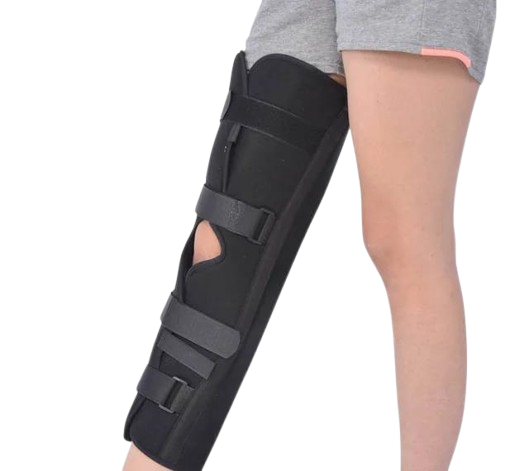
Key Features of a Knee Immobilizer:
- Rigid Support:
- Typically consists of a sturdy frame with metal stays or panels to keep the knee in a fixed position.
- Prevents bending or twisting of the knee joint.
- Adjustable Straps:
- Equipped with Velcro straps to secure the brace snugly around the leg.
- Allows for adjustment to fit various leg sizes.
- Padding:
- Often padded for comfort, reducing pressure on the skin and promoting compliance with wearing.
- Universal Fit:
- Comes in various sizes or as a one-size-fits-all design.
- Some models can accommodate both left and right legs.
Common Uses:
- Post-Surgery Support:
- Stabilizes the knee after procedures like ligament repairs, meniscus surgery, or total knee replacements.
- Injury Recovery:
- Used for conditions like ligament sprains (e.g., ACL, MCL), patellar dislocations, or fractures involving the knee.
- Prevention of Movement:
- Maintains the knee in full extension or a prescribed angle to prevent stress on healing tissues.
- Temporary Support:
- In emergency settings, it provides immediate stabilization until further evaluation and treatment.
Benefits:
- Immobilization: Prevents accidental movements that could worsen the injury.
- Pain Reduction: Reduces strain on the knee, which can alleviate discomfort.
- Ease of Use: Simple to apply and remove, even for non-medical individuals.
Care Instructions:
- Ensure a snug but not overly tight fit to avoid circulation issues.
- Regularly check the skin under the immobilizer for signs of irritation or pressure sores.
- Follow your healthcare provider’s instructions regarding the duration of use and weight-bearing restrictions.
A knee immobilizer is an effective tool for recovery and rehabilitation, providing the necessary support while healing progresses.
There are no reviews yet.