


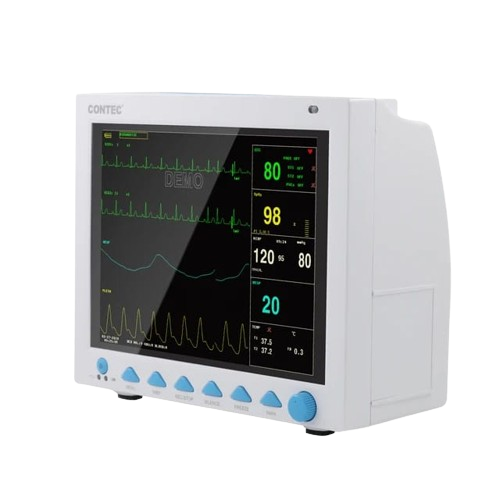
Key Features and Components:
- Display Screen: Modern patient monitors usually feature a colored LED or LCD screen to display various vital signs graphically and numerically.
- ECG (Electrocardiography) Monitoring: This displays the electrical activity of the heart and can track heart rate and rhythm.
- Blood Pressure Monitoring: Often using non-invasive blood pressure (NIBP) cuffs or invasive means (using catheters).
- SpO2 Monitoring: Measures oxygen saturation in the blood using a pulse oximeter, often attached to a fingertip or earlobe.
- Respiratory Rate: Monitors the number of breaths taken per minute.
- Temperature: Can measure and display body temperature, usually through probes or infrared sensors.
- End-Tidal CO2 Monitoring: Measures the amount of carbon dioxide in the exhaled air, important for patients under anesthesia or in critical care.
- Alarm Systems: These provide audible and visual alerts if a patient’s vital signs go beyond preset limits.
- Trending: Many monitors have the capability to trend data, allowing healthcare professionals to observe changes over time.
- Battery Backup: In case of power failures, having battery backup ensures continuous monitoring.
- Connectivity: Many advanced monitors can be integrated with hospital information systems, allowing data to be recorded directly into electronic health records.
Uses:
- Intensive Care Units (ICUs): Continuous monitoring is essential for critically ill patients.
- Operating Rooms: To monitor patients under anesthesia.
- Emergency Rooms: For rapid assessment and monitoring of patients.
- General Wards: For periodic monitoring of patients’ vital signs.
- Home Monitoring: Some monitors are designed for outpatient use or home settings, especially for patients with chronic illnesses.
There are no reviews yet.