


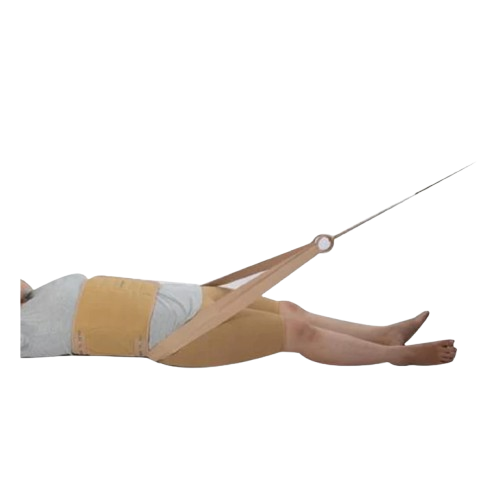
Main Uses
-
Lower back pain (lumbar pain)
-
Sciatica
-
Slipped or herniated lumbar disc
-
Degenerative disc disease
-
Muscle spasms in the lower back
-
Spinal decompression therapy
Key Features of a Pelvic Traction Belt
1. Strong, Durable Material
-
Made from heavy-duty canvas, nylon, or reinforced fabric
-
Designed to withstand continuous traction force without tearing
2. Padded Inner Surface
-
Soft foam or felt padding on the inside
-
Improves patient comfort during traction sessions
-
Prevents skin irritation or pressure sores
3. Adjustable Straps & Buckles
-
Allows fitting for different body sizes
-
Ensures even distribution of traction force
-
Provides secure fastening during therapy
4. Metal or Reinforced D-Rings
-
Located on the sides or front
-
Used to attach ropes, pulleys, or traction cords
-
Strong enough to handle high traction loads
5. Wide Belt Design
-
Covers a large pelvic area
-
Helps distribute force evenly across the hips and pelvis
-
Prevents slipping during traction
6. Easy to Clean & Maintain
-
Many are washable or wipe-clean
-
Suitable for repeated use in clinics and hospitals
Where It’s Commonly Used
-
Physiotherapy clinics
-
Orthopedic hospitals
-
Rehabilitation centers
-
Chiropractic clinics
Important Note
Pelvic traction belts should only be used under professional supervision, as incorrect traction force or positioning can cause injury.
There are no reviews yet.