


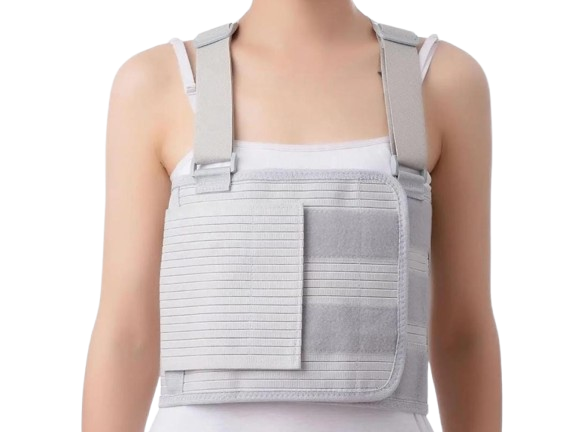
Here are the key features of a typical sternal brace:
1. Sternal Stabilization
-
It applies gentle, consistent pressure across the chest to stabilize the sternum.
-
Prevents excessive movement (like coughing, deep breathing, or sudden motions) that could stress the healing bone.
2. Breathable, Comfortable Materials
-
Made from lightweight, breathable fabrics (e.g., cotton, foam, or mesh).
-
Reduces sweating and skin irritation for long-term wear.
3. Adjustable Compression
-
Velcro straps, buckles, or hook-and-loop closures allow easy adjustment.
-
Patients or caregivers can fine-tune tightness based on comfort and swelling.
4. Ergonomic Design
-
Contoured shape to fit around the chest and torso without impeding breathing.
-
Often designed with a front opening for easy donning and doffing.
5. Posture Support
-
Some models help maintain proper upper body posture, reducing the risk of slouching (which can strain the sternum).
6. Targeted Chest Support for Specific Activities
-
Some braces are optimized to support during coughing, sneezing, laughing, or movements involving upper limbs.
7. Optional Shoulder Straps
-
A few designs include shoulder straps for additional thoracic stabilization.
-
Useful in severe cases needing more restrictive support.
8. Radiolucent (X-Ray Friendly)
-
Some high-end models are made from materials that do not interfere with X-rays, allowing imaging without removing the brace.
9. Hygienic Features
-
Antibacterial, hypoallergenic, and washable covers are often included to maintain hygiene.
10. Variants for Different Needs
-
Pediatric, bariatric, and custom-fit versions are available based on patient size and specific medical conditions.
There are no reviews yet.