


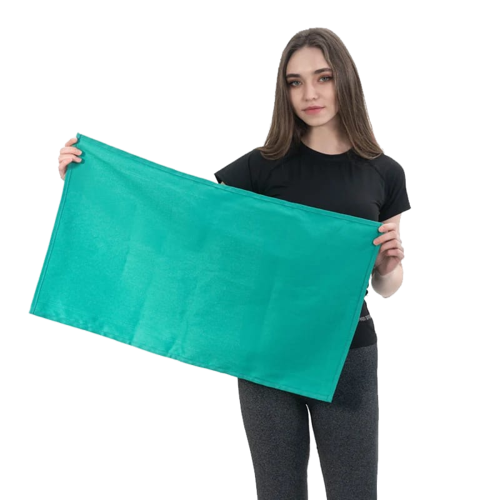
Features
- Color: They are typically green, but surgical towels can also come in blue or other colors. The green color helps mask blood and other fluids, which can be visually advantageous during procedures.
- Material: Surgical towels are usually made of high-quality cotton, which is highly absorbent. This makes them ideal for soaking up fluids during surgical procedures.
- Lint-Free: It’s essential that surgical towels are lint-free to minimize the risk of contamination in a sterile surgical environment.
- Size and Texture: They are usually of a specific size suitable for draping and for the tasks needed during surgeries. The texture is designed to be absorbent yet gentle on tissues.
- Sterilization: Before use in a surgical or clinical setting, these towels are typically sterilized, often using an autoclave, to ensure they are free from any potential pathogens.
- Use in Medical Procedures:
- Draping: They can be used to drape around a surgical site, isolating the area to be operated on.
- Absorption: During procedures, they can be used to soak up blood or other fluids.
- Holding Instruments: They can be laid out on a tray to hold sterilized surgical instruments.
- Hand Drying: Surgeons might use them to dry their hands before putting on surgical gloves, ensuring hands are dry to maintain the gloves’ integrity.
- Disposability: While many surgical towels are designed for single use to maintain sterility, some can be laundered and sterilized for reuse, depending on the facility’s protocols and the specific towel’s design.
- Purchasing: When buying surgical towels, it’s essential to ensure they meet the necessary medical standards and are appropriate for the intended purpose. Buying from reputable medical supply companies is advisable.
- Storage: In a clinical or surgical setting, it’s crucial to store these towels in a way that maintains their sterility. They are often kept in sealed sterilization pouches or containers until needed.
There are no reviews yet.