


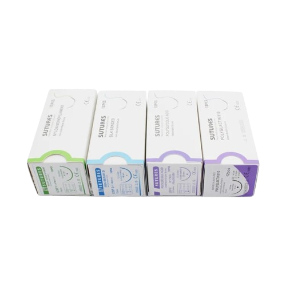
Here are some key features and information about surgical nylon sutures:
- Material: Surgical nylon sutures are made from a synthetic, non-absorbable material called nylon. Nylon is a durable, strong, and flexible material that resists degradation by enzymes and maintains its strength over time.
- Non-Absorbable: Nylon sutures are non-absorbable, which means that they do not break down or dissolve in the body. This property makes them suitable for use in situations where long-term wound support is needed.
- Monofilament vs. Multifilament: Nylon sutures come in both monofilament and multifilament varieties. Monofilament sutures are composed of a single strand of nylon, making them smooth and easy to handle. Multifilament sutures consist of several intertwined strands, which can provide better tissue handling but may be more prone to harboring bacteria.
- Color-Coding: Nylon sutures are often color-coded to differentiate between various sizes and types. Common colors include black, blue, and clear, with each color corresponding to a specific suture size or type.
- Size and Diameter: Sutures are available in a range of sizes or diameters, with the appropriate size chosen based on the surgical procedure and the type of tissue being sutured.
- Needle Attachment: Surgical nylon sutures are attached to a surgical needle, which facilitates the suturing process. The type of needle (e.g., round, taper, cutting) is chosen based on the surgical task and the location of the incision.
- Tensile Strength: Nylon sutures have high tensile strength, which is important for providing strong wound closure and tissue support.
- Indications: Nylon sutures are commonly used for skin closure, as well as for suturing in various soft tissues. They are particularly suitable for situations where long-term support is required, such as with external skin sutures, deep tissue sutures, or for closing internal structures during surgery.
- Knot Security: Nylon sutures are known for their knot security. Surgeons can tie reliable knots with these sutures to ensure the wound remains closed.
- Removal: Non-absorbable sutures like nylon need to be removed after a certain period (typically 7-14 days) as part of the wound healing process.
There are no reviews yet.