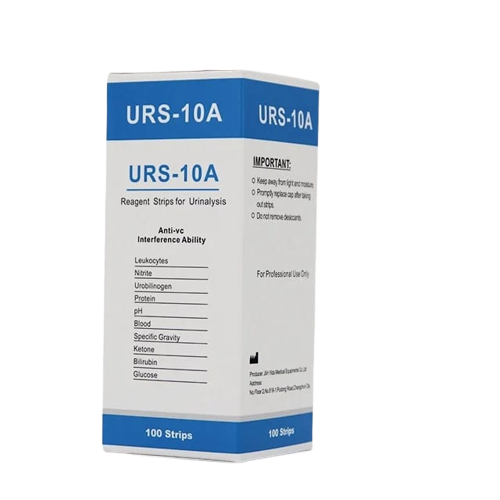
Urinalysis test strips in kenya
(0)Urinalysis test strips, commonly referred to as urine dipsticks, are strips that contain specific chemical reagents that react with various components in urine to provide a semi-quantitative or qualitative assessment of certain parameters. They are frequently used in clinical settings to quickly evaluate and monitor various health conditions.
In stock
SKU: urinalysis-strips in kenya
Categories: Laboratory products and consumables
Product description
- Parameters Typically Assessed:
- pH: Measures the acidity or alkalinity of the urine.
- Protein: Detects the presence of proteins in the urine, which can be an indicator of kidney disease.
- Glucose: Elevated levels can indicate diabetes or other glucose metabolism disorders.
- Ketones: By-products of fat metabolism. Elevated levels can be seen in uncontrolled diabetes, fasting, or high-fat diets.
- Blood (Hemoglobin): Can indicate urinary tract infections, kidney disease, or urinary tract injuries.
- Bilirubin: The presence may suggest liver disease or hemolysis.
- Urobilinogen: Elevated levels can indicate liver disease or hemolytic anemia.
- Nitrite: Commonly produced by bacteria, its presence can suggest a urinary tract infection.
- Leukocytes: Indicates white blood cells in the urine, which can suggest an infection.
- Specific Gravity: Measures the concentration of urine, which can provide information about hydration status and kidney function.
- Usage:
- Collect a fresh urine sample in a clean container.
- Dip the test strip into the urine sample for the duration specified by the manufacturer (usually a few seconds).
- Remove the strip and shake off any excess urine.
- After a set time (typically ranging from seconds to a couple of minutes, depending on the parameter), compare the colors on the test strip to the color chart provided on the test strip container.
- Advantages:
- Rapid Results: Provides quick, on-the-spot results, which is especially useful for screening or immediate clinical decision-making.
- Simplicity: The test is straightforward and can be performed by individuals at home or by healthcare professionals.
- Cost-Effective: A less expensive way to screen for many conditions compared to more sophisticated lab tests.
Customer reviews
Not rated yet0 reviews
No reviews yet. Be the first to rate this product.
Write a review
Your email address is optional and will not be displayed.
Related products
Sale
Sale
Sale
Sale