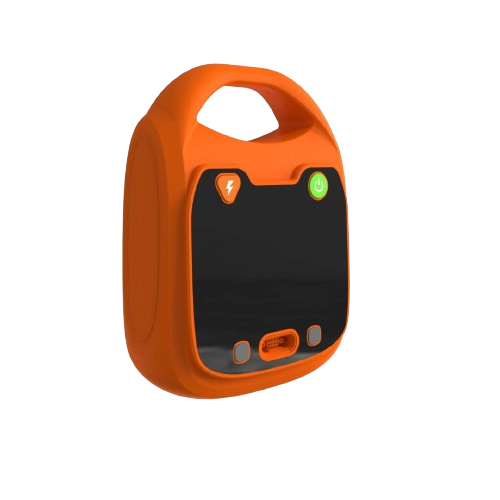
AED Defibrillator price in Kenya.
(0)An AED (Automated External Defibrillator) is a portable medical device designed to treat people experiencing sudden cardiac arrest, a condition where the heart suddenly stops beating effectively. The AED analyzes the heart's rhythm and, if necessary, delivers an electric shock to help the heart re-establish an effective rhythm.
In stock
SKU: Not specified
Categories: Theater and surgical products
Product description
Key Features of an AED Waveform: Biphasic Truncated exponential The maximum energy up to 200J Adult mode and optional pediatric mode Voice prompts in the whole process Particle and Water Ingress: lP55 Dual languages to switch and volume settings Regular self-test Unique human body resistance measurement ECG acquisition and analysis Reliable design for data security AED Defibrillator: Self-test: Daily, Weekly, Monthly Mode: Adult and child Waveform: Biphasic truncated exponential Energy: 200-Joules max Energy Sequence Child mode: 50-50-75 Joules, Adult mode: 150-150-200 Joules Charge time (new, at 25 degree): less than 7 sec. to 150J; less than10 sec. to 200J ; less than 3 sec. to 75J; less than 3 sec. to 50J. Analysis time: 9sec. Voice prompt: Extensive voice prompt. Visual Indicators: LED prompts.
- Automated Analysis: The device automatically assesses the heart's rhythm when connected to the patient.
- Shock Delivery: If a shockable rhythm is detected (like ventricular fibrillation or ventricular tachycardia), the AED provides a voice prompt to administer a shock.
- Ease of Use: AEDs are designed for use by non-medical personnel, with simple voice and visual instructions.
- Safety Features: AEDs are programmed to only deliver a shock when it is necessary, reducing the risk of improper use.
Steps for Using an AED:
- Turn on the AED: Most have a power button or start automatically when opened.
- Attach the Pads: Place the adhesive electrode pads on the patient’s bare chest as indicated.
- Follow Prompts: The AED will analyze the heart rhythm and instruct whether a shock is needed.
- Administer Shock if Directed: Press the button to deliver the shock, or the device will do it automatically in some models.
- Perform CPR if Needed: The AED may guide you to continue CPR after delivering a shock.
Where AEDs Are Commonly Found:
- Public places (airports, malls, sports arenas)
- Schools and workplaces
- Gyms and fitness centers
- Hospitals and clinics
Importance of AEDs:
AEDs are critical in increasing survival rates during sudden cardiac arrest. When combined with CPR, AEDs significantly improve the chances of reviving the patient until professional medical help arrives.Customer reviews
Not rated yet0 reviews
No reviews yet. Be the first to rate this product.
Write a review
Your email address is optional and will not be displayed.
Related products
Sale
Sale
Sale
Sale