
Vital signs monitor kenya
(0)
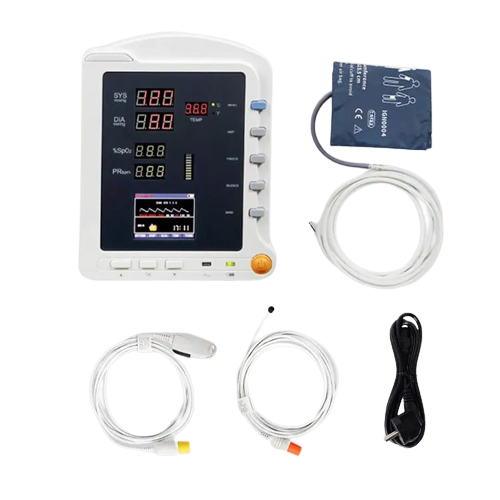
A vital signs monitor is a medical device used to monitor and display vital physiological parameters of a patient. These parameters give healthcare providers crucial information about the patient's overall health status and can indicate potential medical issues that need intervention.
In stock
SKU: vital-signs-monitor kenya
Categories: Theater and surgical products
Product description
Commonly Monitored Vital Signs:
- Heart Rate (HR): Measures the number of heartbeats per minute.
- Blood Pressure (BP): Measures the force of blood against the walls of the arteries. It's usually presented with two values: systolic (when the heart beats) and diastolic (when the heart rests between beats).
- Respiratory Rate (RR): The number of breaths taken per minute.
- Oxygen Saturation (SpO2): Measures the percentage of hemoglobin binding sites in the bloodstream occupied by oxygen. This is usually monitored using a pulse oximeter, which is often a part of vital sign monitors.
- Temperature: Can be monitored using various methods, including oral, rectal, tympanic (ear), or temporal (forehead) routes.
Features of a Vital Signs Monitor:
- Display Screen: To show real-time readings of the monitored parameters.
- Alarms: To alert healthcare providers if a reading goes beyond preset limits.
- Trend Monitoring: Some monitors can display trends over time, helping providers see changes in the patient's condition.
- Battery Backup: In case of a power outage, this ensures continuous monitoring.
- Portability: Some are designed to be easily moved between patient rooms or attached to mobile medical carts.
- Data Storage: Some advanced monitors can store patient data or even integrate with hospital electronic health record (EHR) systems.
- Multi-parameter Monitoring: Most modern vital signs monitors can simultaneously display multiple parameters.
Considerations for Usage:
- Patient Suitability: Monitors may need to be adjusted or calibrated based on the patient's age, size, or underlying health conditions.
- Probe/Transducer Placement: Proper placement is essential for accurate readings. For example, the SpO2 probe should have a good fit, and blood pressure cuffs should be the appropriate size.
- Interference: Make sure there's minimal interference or artifacts, especially for ECG or SpO2 readings. For instance, excessive patient movement can affect readings.
- Calibration: Regular calibration is crucial to ensure accurate readings.
Attributes
Customer reviews
Not rated yet0 reviews
No reviews yet. Be the first to rate this product.
Write a review
Your email address is optional and will not be displayed.
Related products
Sale
Sale
Sale
Sale